Who Owns Twitter/X and Why Was Twitter Renamed X?
Twitter is now known as X, but many people still ask who owns Twitter, who owns X, and why the famous bird logo was replaced. The short answer is that Elon Musk acquired Twitter in 2022, Twitter later became part of X Corp, and the rebrand to X was connected to Musk’s long-term idea of building an “everything app.” This guide explains the ownership timeline, the reason behind the name change, and what the shift means for users and creators.
What you will learn
This guide is for creators, founders, marketers, and SaaS teams that want a practical way to plan better X content without turning their account into a robotic posting machine.
The goal is to give you a repeatable workflow: collect ideas, turn them into useful posts, schedule intentionally, review quality, and use analytics to improve the next batch.
Who owns Twitter/X today?
Twitter was acquired by Elon Musk in 2022 in a deal widely reported at about $44 billion. After the acquisition, the old Twitter company structure changed, and the platform became associated with X Corp, the company that operates the social network now known as X.
The ownership picture has continued to evolve because X has been closely connected with Musk’s broader group of companies and AI ambitions. Public reporting has described X as being tied to xAI through an all-stock transaction, reflecting Musk’s plan to connect the social platform with artificial intelligence and broader technology products.
For everyday users, the important point is simple: the platform people used to call Twitter is now operated under the X brand, with Elon Musk remaining the central public figure behind its ownership, product direction, and long-term vision.
When did Twitter become X?
The public rebrand from Twitter to X happened in July 2023. The familiar blue bird branding was replaced by the X logo, and the platform gradually changed language around the product from tweets and retweets toward posts and reposts.
The change was not only a logo update. The domain x.com became more central to the platform, the app branding changed, and the company began presenting X as a broader platform instead of only a microblogging network.
Many users still say Twitter and tweet because the old brand was extremely recognizable. That is why both terms continue to appear in search behavior, creator conversations, and educational guides.
Why was Twitter renamed X?
The biggest reason was Elon Musk’s long-standing interest in the letter X and the idea of building a broader “everything app.” Musk has used X branding across multiple projects and has publicly connected Twitter’s acquisition to the larger vision of creating X.
The rebrand also signaled that the company wanted to move beyond the old Twitter identity. X has been described as a platform intended for text, video, audio, payments, messaging, creator tools, and AI-connected experiences rather than only short posts.
In simple terms, Twitter was renamed X because Musk wanted the platform to represent a bigger product vision. The bird logo represented the old Twitter. The X brand was meant to represent a new direction.
What does X mean for creators?
For creators, the name change does not remove the core challenge: you still need to post useful content consistently, understand your audience, and build trust over time. Whether people call it Twitter or X, the platform rewards clear ideas, timely posts, useful threads, and active conversations.
The rebrand does create a search and language challenge. Some users search for “tweet,” others search for “post on X,” and many use both. That is why creators and tools like TweetQueue should understand both terms and create content that matches how real users search.
If you are building a personal brand or product audience, the best move is to focus less on the name debate and more on your posting system: content ideas, hooks, timing, scheduling, and analytics review.
Why do people still say Twitter and tweet?
Twitter was one of the most recognizable social media brands in the world for many years. Words like tweet, retweet, Twitter thread, and Twitter handle became part of everyday internet language. Because of that history, people continue using those words even after the official rebrand.
This is normal after a major rebrand. Users often keep old language until the new terms become natural. In search engines, both “Twitter” and “X” terms are still important because different users describe the same platform in different ways.
For SEO and product education, the safest approach is to use both phrases naturally: Twitter/X, X posts, tweets, Twitter scheduling, and X content calendar. That helps readers understand the topic without feeling confused.
How TweetQueue fits into the Twitter/X shift
TweetQueue is built around the real way people use the platform today. Some users still think in tweets, while others think in X posts. TweetQueue supports the workflow behind both terms: planning content, writing stronger posts, scheduling consistently, and improving the queue with AI help.
For creators, founders, freelancers, and brands, the platform name matters less than the system. A strong system helps you collect ideas, write better hooks, schedule at the right time, and keep publishing even when you are busy.
That is why TweetQueue focuses on practical publishing workflows. Whether you call it Twitter or X, the goal is the same: better content, better timing, and a more consistent presence.
A practical workflow you can use today
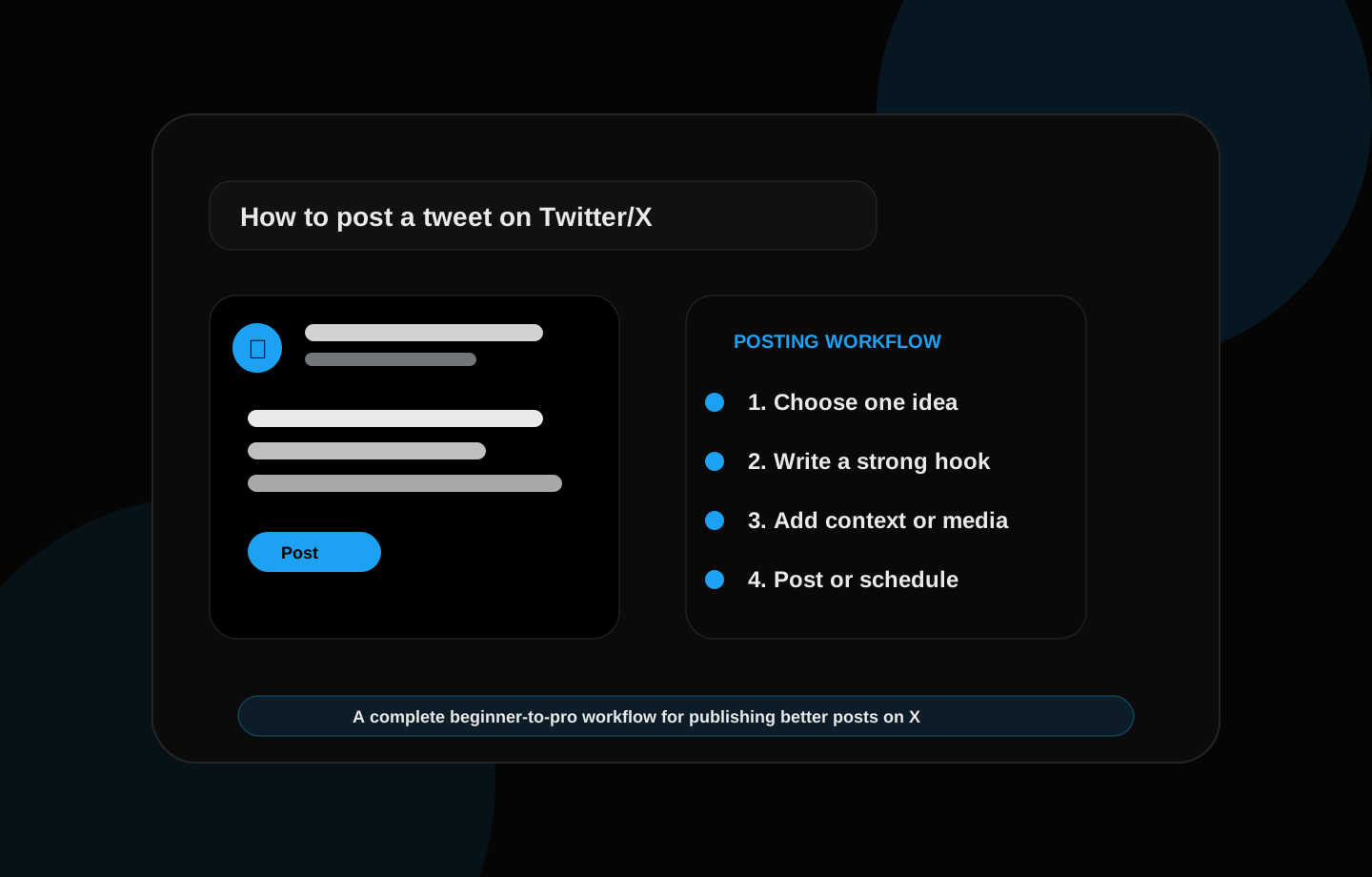
Start by writing down ten rough ideas from your real work: customer questions, product decisions, lessons learned, screenshots, mistakes, launch updates, and opinions you keep repeating in conversations. These raw ideas are more valuable than generic prompts because they come from your actual experience.
Next, turn each idea into one clear post angle. A single idea can become a short lesson, a question, a checklist, a mini-story, or a product note. Choosing the angle before writing keeps the post focused and makes the final queue easier to review.
Finally, schedule the strongest posts into a weekly queue. Do not fill every slot just because you can. A smaller queue of strong posts usually performs better than a crowded queue of weak content.
Common mistakes to avoid
The biggest mistake is creating posts only because a keyword looks attractive. Search visibility matters, but readers stay when the page or post actually helps them solve a problem. Useful content should answer the search intent completely and give examples the reader can apply.
Another mistake is using the same hook style every day. Repeated patterns make an account feel automated. Mix direct lessons, questions, short stories, mistakes, proof points, and practical checklists so the feed feels human.
Do not publish AI output without review. AI is helpful for brainstorming and rewriting, but your final post should still sound like your account and match what you actually believe.
How TweetQueue fits into this system
TweetQueue helps you move from random posting to an organized publishing workflow. Instead of guessing what to post every day, you can prepare ideas, review your weekly queue, and schedule content around the windows that matter most to your audience.
The best use of TweetQueue is not blind automation. It is controlled consistency. You stay responsible for the message, while the system helps you publish on time and keep your content calendar clean.
Quick checklist
- Elon Musk acquired Twitter in 2022
- Twitter later became associated with X Corp
- The public rebrand from Twitter to X happened in 2023
- The X name reflects Musk’s broader everything-app vision
- Many users still say Twitter and tweet because the old brand was deeply familiar
- Creators should use both Twitter and X language naturally in educational content
- TweetQueue helps users plan and schedule content for the platform regardless of the name they use
Frequently asked questions
Should I schedule every post on X?
No. Schedule planned educational posts, product updates, launch reminders, and recurring content. Keep space for live replies, timely opinions, and real conversations so your account still feels active and human.
Does longer content always rank better on Google?
No. Length alone is not the goal. A longer article helps only when it gives a more complete, useful, and satisfying answer. The content should cover the topic deeply without adding filler.
Can AI write my X posts for me?
AI can draft hooks, variations, and content calendars, but you should still review the final post for accuracy, tone, and originality before scheduling it.
Plan these ideas inside TweetQueue
Turn the checklist into scheduled posts, review the week, and keep your X content consistent without rushing every day.
Start Scheduling Free